
Start with the thermostat, the filter, and the outdoor unit clearance. Those three checks resolve most cases where an aircon not cooling properly is driving you mad on a 35°C afternoon. If you spot ice on the indoor coil or refrigerant lines, or smell anything burning, switch the system off now and book a certified technician rather than pushing through.
Try these first:
- Confirm the thermostat is set to "cool" with a setpoint below room temperature, not just "fan."
- Pull the filter and hold it up to a light. If you can't see through it, that's likely your problem.
Roughly dirty filters, frozen coils, dirty condensers, failed capacitors and low refrigerant account for the bulk of cooling complaints call-outs receive, and most of those start as something you can check yourself in under ten minutes.
Key Takeaways
Most aircon not cooling problems trace back to the thermostat, a dirty filter, or a blocked outdoor condenser, and fixing them in that order avoids unnecessary repair costs.
| Point | Details |
|---|---|
| Check the easy stuff first | Thermostat mode, filter condition and outdoor clearance solve the majority of cooling complaints. |
| Ice means stop immediately | Switch to fan-only and call a technician rather than risk compressor damage. |
| Refrigerant is sealed | A low charge means a leak, not normal loss, so topping up alone is a short-term patch. |
| Follow the pro sequence | Technicians check thermostat, airflow, coil, outdoor unit, refrigerant, then compressor, in that order. |
| Book Dualflowservices for the fault you can't fix | Dualflowservices handles emergency call-outs and scheduled servicing across the Mornington Peninsula when DIY checks don't resolve the issue. |
Table of Contents
- Why is my ac not cooling? Common causes explained
- Step-by-step DIY checks and safe fixes to try now
- When should you call an aircon technician instead?
- What a technician actually checks during diagnosis
- How often should you service your aircon to avoid this?
- Your three-step action plan for a system that won't cool
- Inspecting the drain line and removing clogs
- Examining ductwork for leaks or disconnections
- Ensuring proper insulation around refrigerant lines
- What actually matters when your aircon stops cooling
- Book a technician who diagnoses it right the first time
- Sources
Why is my ac not cooling? Common causes explained
Different symptoms point to different faults, and matching them correctly saves you from paying for a service call that could've been a five-minute fix.
Thermostat problems are the cheapest to rule out. A unit set to "fan" instead of "cool," a setpoint sitting above room temperature, or a sensor reading the wrong spot in the house can all masquerade as a broken system when nothing is actually broken.
Airflow restrictions are the next most common culprit. A clogged filter starves the system of the air it needs to move across the coil, closed vents in unused rooms push pressure back through the ductwork, and a collapsed flexible duct section can choke a single room's airflow while the rest of the house cools fine.
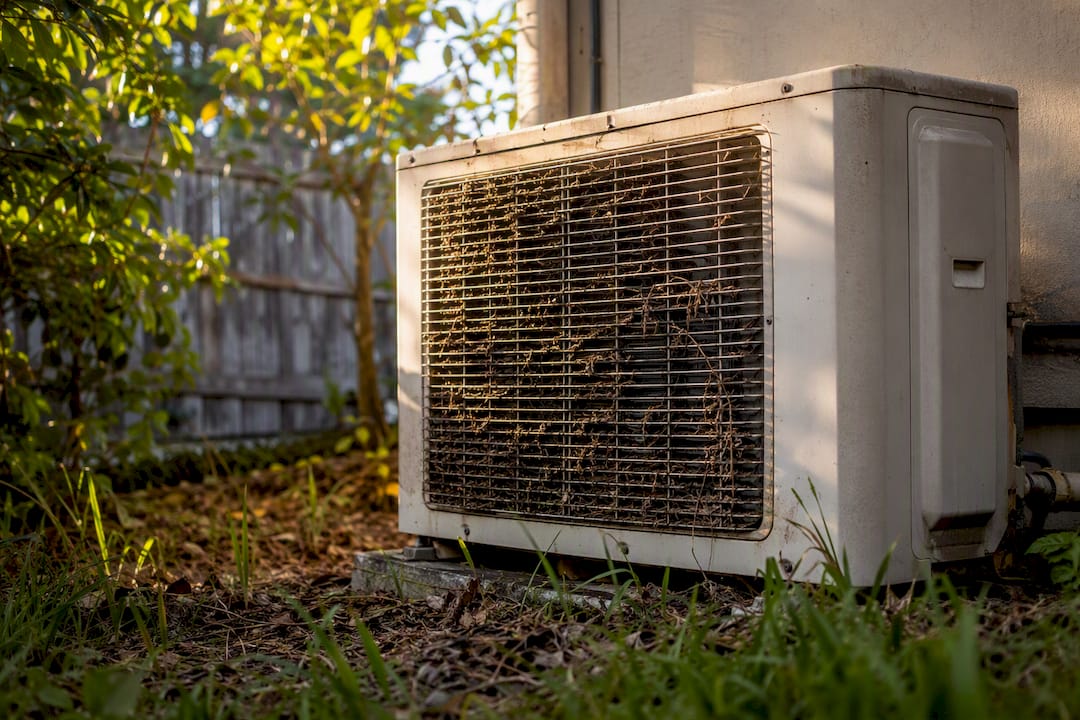
Outside, a blocked condenser struggles to dump heat. Grass clippings, leaves, a fence built too close, or a fan motor that's simply given up will all show up as warm air inside, even though the indoor unit sounds perfectly normal.
Frozen evaporator coils usually trace back to restricted airflow or low refrigerant. Ice forms because the coil gets too cold, which then blocks airflow further and makes the problem worse in a feedback loop.
Refrigerant deserves a section of its own. An air conditioner is a sealed system that shouldn't lose gas during normal use. If your unit is low, something is leaking, and simply topping up the gas without finding and repairing the leak just buys you a few more weeks before it's back to warm air again.
Electrical and mechanical faults include:
- A failed run capacitor, often heard as the outdoor fan humming but not spinning.
- A worn contactor that fails to send power reliably to the compressor.
- A tripped breaker or blown fuse cutting power intermittently.
Finally, some systems just aren't sized for the room they're cooling. An undersized unit in a north-facing living area with big glass windows will run flat out on a 40°C day and still lose the battle against heat gain.
Step-by-step DIY checks and safe fixes to try now
Work through these in order. Each one takes a few minutes, and most genuine fixes show a result fast.
- Check for ice or burning smells first. If either is present, switch the system off immediately and set it to fan-only. Running a frozen system risks permanent compressor damage, and electrical smells are never worth waiting out.
- Confirm the thermostat mode and setpoint. Reset it to "cool" with a temperature at least 3 to 4 degrees below the current room reading, then check the breaker panel for anything tripped.
- Pull and inspect the filter. Hold it to a window or light globe. If light barely gets through, replace it, a step manufacturers list as one of the first and most effective fixes.
- Walk the house checking vents and returns. Open any closed registers, and move furniture or curtains blocking return air grilles.
- Clear the outdoor unit. Cut back vegetation, rake away debris, and keep at least 60 centimetres of open space around all sides. With power off at the isolator switch, a gentle hose rinse through the fins (never a pressure washer) clears built-up grime.
Pro Tip: Give each fix 15 to 60 minutes before judging the result. Refrigerant-starved or airflow-choked systems take time to re-establish a cold supply, so don't assume a fix failed after five minutes.
Keep in mind that clearing a filter or vent is often a permanent fix, while thawing a frozen coil is really just resetting the symptom. If ice comes back within a day or two, something upstream, usually airflow or refrigerant, still needs attention. For general maintenance habits that head off these issues altogether, our air conditioning maintenance checklist for summer is worth a look.
When should you call an aircon technician instead?
Some signs mean stop troubleshooting and pick up the phone.
- Ice that won't clear after several hours on fan-only, or ice reforming quickly after thawing.
- Hissing sounds, oily residue on fittings, or a slow, steady decline in cooling over weeks, which usually points to a refrigerant leak requiring a licensed repair.
- Burning smells, breakers that trip again after resetting, or a loud hum with no fan movement — all electrical red flags.
- A compressor that struggles to start or cycles on and off rapidly, since running it in that state risks total unit failure.
Ice, refrigerant issues and electrical faults are same-day emergency territory. A gradual performance drop with no acute symptoms can usually wait for a scheduled diagnostic visit.
What a technician actually checks during diagnosis
Certified technicians work a fixed sequence for a reason: thermostat, then airflow, then the evaporator coil, then the outdoor unit, then refrigerant, then compressor. Skipping steps is how people end up paying for a new compressor when the real fault was an $40 capacitor.
Expect these tools in a proper diagnostic visit:
- An infrared thermometer to measure the temperature split between supply and return air, typically 16 to 22°C on a healthy system.
- Manifold gauges to read refrigerant pressure and subcooling.
- A capacitor tester, since a failed run capacitor often shows up as a humming outdoor fan that won't spin, a comparatively cheap fix next to a compressor swap.
- Electronic leak detectors or UV dye for slow refrigerant leaks.
Refrigerant handling and major electrical repairs are restricted to licensed technicians in Australia, both for safety and because mishandled refrigerant is an environmental and legal issue, not just a technical one.
Repair complexity varies widely: filter swaps and capacitor replacements are quick and cheap, leak repairs and recharges sit in the middle, and compressor or chassis replacement is the expensive end of the scale.
How often should you service your aircon to avoid this?
Prevention is cheaper than any repair on this list, and most of it takes less effort than the DIY checks above.
- Change filters monthly during heavy summer use; higher-grade media filters can often stretch to two or three months. If airflow feels weaker than usual or the filter looks grey rather than white, that's your cue.
- Clear the outdoor unit every season. Keep 60 centimetres free on all sides, hose down the fins gently, and check the condensate drain and pan for standing water or algae.
- Book an annual professional service. A proper visit includes coil cleaning, capacitor testing, refrigerant pressure checks, and a full electrical inspection.
- For businesses and aged care facilities, shift to a planned maintenance schedule with dated service records. Regulators and insurers increasingly expect documented upkeep, not reactive repairs, and our guide on maintaining cooling systems in aged care covers what that looks like in practice.
Simple habits like these prevent a large share of the service calls technicians attend for poor cooling.
Your three-step action plan for a system that won't cool
Run these now: check the thermostat mode and setpoint, inspect the filter, and clear 60 centimetres around the outdoor unit.
- Still warm? Switch to fan-only, note any ice, smells or noises, and call a technician.
- Have ready for the call: unit make and model, approximate age, any error codes displayed, and how long the fault has been going on.
Inspecting the drain line and removing clogs
A blocked condensate drain doesn't stop cooling directly, but it will shut a system down through a safety switch, or worse, cause water damage that gets blamed on "the aircon not cooling" when the real issue is elsewhere entirely.
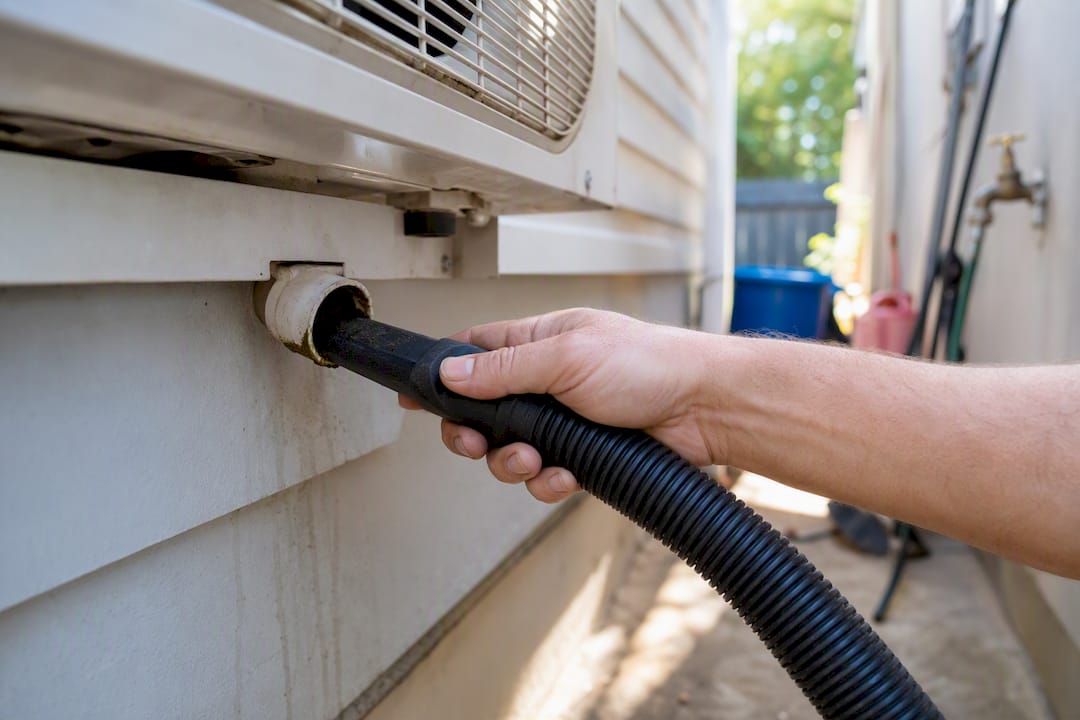
Most split systems and ducted units have a PVC drain line running from the indoor unit to an outside discharge point or a gravity drain. Algae, dust, and general grime build up inside that pipe over time, especially in humid coastal areas where the coil is constantly producing condensate.
Look for water pooling near the indoor unit, a musty smell, or (on ducted systems) the unit shutting off unexpectedly on hot days when it's working hardest. Many modern units have a float switch that cuts cooling the moment the drain pan fills, which is a safety feature, not a fault, though it presents identically to a system that's simply stopped cooling.
Clearing a mild clog is within reach for most homeowners: locate the external drain outlet and check for a steady drip when the system is running, or use a wet/dry vacuum on the external end to pull a blockage free. Persistent clogs, or water pooling inside a ceiling space on a ducted system, need a technician, since ceiling access and pan replacement are jobs better left professional. If you've noticed odours alongside pooling water, our piece on why an air conditioner smells musty walks through the difference between a quick fix and a call-out.
Examining ductwork for leaks or disconnections
Ducted systems lose a surprising amount of cooling capacity to the ductwork itself, not the unit. A system can be running perfectly and still leave rooms warm if the air never makes it there intact.
Disconnected joints are the most common fault, usually where flexible duct meets a metal collar or plenum. Age, ceiling foot traffic during other trade work, or simple installation shortcuts all cause joints to work loose over years. A section of duct crushed under stored boxes in a roof space or pinched around a beam has the same effect: air escapes into the ceiling cavity instead of reaching the vent.
Signs to look for include one or two rooms consistently warmer than the rest of the house, a hissing sound from the ceiling when the system runs, or a noticeable temperature drop between the vent and the room a few metres away. Renovation work is a common trigger too. If you're planning structural changes, coordinating duct access properly avoids this exact problem, and guidance on HVAC access during home renovations is worth reading before work starts.
Checking ductwork properly means getting into the roof space, which isn't always practical or safe without the right access and lighting. Sealing minor gaps with foil tape is a reasonable stopgap, but a full duct inspection and re-seal is a job for a technician who can also check insulation and clearances while they're up there.
Ensuring proper insulation around refrigerant lines
The two copper lines running between your indoor and outdoor units carry refrigerant at very different temperatures, and the insulation wrapped around them matters more than most homeowners realise.
The larger suction line runs cold, often well below the surrounding air temperature, which means it needs continuous foam insulation to stop condensation forming along its length. Where that insulation has perished, split from UV exposure, or been chewed by possums or rodents, you'll often see moisture dripping along the line or, in warmer months, a visible drop in cooling efficiency as the line picks up heat before it reaches the indoor coil.
Gaps in insulation, particularly at bends, joints near the wall penetration, or sections exposed to direct sun, force the compressor to work harder to maintain the same indoor temperature. On a 40°C day, that's the difference between a system that keeps up and one that just falls further behind as the afternoon goes on.
Replacing perished foam sleeving is a straightforward job if the line set is accessible, and it's cheap insurance against exactly the kind of gradual performance decline that gets misdiagnosed as a refrigerant leak. If the line runs through a wall cavity or roof space, though, get a technician to inspect it alongside a proper pressure check, since re-insulating without addressing an actual leak just delays the real fix.
What actually matters when your aircon stops cooling
Most advice on this topic treats every warm-air complaint the same, telling readers to "check the filter" and leave it there. That undersells how much the diagnostic order matters. Skipping straight to refrigerant when the real fault is a $15 filter, or ignoring a hummed-but-not-spinning outdoor fan because it "sounds electrical," is how simple jobs turn into expensive ones.
The thing conventional advice underplays is how often airflow, not refrigerant, is the actual villain. A clogged filter or a crushed duct section mimics a "dying" system convincingly enough that people book a regas they didn't need. Work the sequence properly, thermostat first, then airflow, then the coil, and you'll rule out the cheap causes before paying for the expensive ones.
If there's one thing worth prioritising, it's treating ice and burning smells as hard stops rather than curiosities. Everything else on this list can wait for a scheduled visit. Those two can't.
— Mike
Book a technician who diagnoses it right the first time
Working through filters, vents and condenser clearance yourself is worth doing, but when the fault sits deeper, a frozen coil that keeps returning, a hum with no fan movement, or refrigerant pressures you can't measure at home, guesswork gets expensive fast. Dualflowservices is the local alternative to calling around for quotes: one team handles the emergency call-out, the diagnostic, and the repair, without you needing to coordinate separate trades for the electrical and refrigerant side of the job.

That matters most for aged care, retirement villages and disability care homes, where a cooling failure on a 40°C day isn't just uncomfortable, it's a compliance and welfare issue that needs a same-day response, not a booking three weeks out. Dualflowservices covers emergency and scheduled heating and cooling work across the Mornington Peninsula and surrounding Melbourne suburbs, for homes, businesses and care facilities alike.
If your system is still warm after the checks in this guide, book an inspection with Dualflowservices and get the diagnostic sequence done properly the first time.
Sources
This guide draws on troubleshooting steps from ServiceMag, The Spruce, USA TODAY, and Carrier. For a professional inspection, Dualflowservices covers the Mornington Peninsula.
- AC not cooling: Troubleshooting central air from the thermostat to the compressor | ServiceMag
- 9 reasons your AC is not cooling your home (and how to fix it fast) | The Spruce
- How to fix an AC that is blowing warm air | USA TODAY
- Air conditioner not cooling | Carrier