If your AC trips breaker every time it starts, the culprit is usually a weakened start capacitor, restricted airflow from a dirty filter, a corroded electrical connection, or a breaker that's simply worn out. Stop resetting it repeatedly. Switch the circuit off, note when it trips, and book a diagnostic. A technician's first visit will preserve that trip pattern, clamp-test the start amps, and check the capacitor and connections before touching anything else.
TL;DR:
- Most AC breaker trips are caused by a faulty start capacitor, restricted airflow, loose electrical connections, or aging breakerage.
- The timing of the trip provides clues: immediate trips suggest capacitor or contactor issues, while delayed trips point to airflow, refrigerant, or wiring problems.
- Repeatedly resetting a breaker risks worsening faults, causing wiring damage or compressor failure; one reset is acceptable, but never more.
- A proper diagnosis involves evaluating trip patterns, testing amps, checking capacitors, and inspecting connections before replacing parts.
- Routine maintenance such as filter replacements, coil cleaning, and keeping a trip log can prevent most trips and reduce repair costs.
Table of Contents
- Why does my AC breaker trip? The common causes explained
- What does the timing of the trip tell you?
- Is it safe to keep resetting a tripped AC breaker?
- When should you call an electrician or HVAC technician?
- How do technicians actually diagnose and fix a tripping AC?
- How can you prevent an AC breaker from tripping again?
- What tradies actually see on these jobs
- Book a proper diagnostic instead of guessing again
- Where this guidance comes from
- Sources
Why does my AC breaker trip? The common causes explained
Most breaker trips trace back to one of six things, and each leaves its own fingerprint. Learning to spot that fingerprint means you can describe the fault accurately instead of guessing, which saves a technician time and saves you money on the call-out.
- Dirty or blocked filters and restricted airflow. A clogged filter raises head pressure in the system, forcing the compressor to draw more current than it should. You'll usually notice weaker cooling first, then trips that happen after the unit has been running for a while rather than right at startup.
- A weak or failed start/run capacitor. This is the classic cause of breakers tripping the moment the AC starts, as a degraded capacitor makes the compressor pull a bigger, longer inrush current than a healthy one would. A bulged or leaking capacitor case is often the giveaway a technician spots on sight.
- Outdoor fan or fan motor faults. A struggling fan motor adds mechanical drag right when the compressor is already drawing its heaviest startup current, and together they can push a marginal breaker over the edge.
- Loose or corroded electrical connections and contactor pitting. Loose terminals and pitted contactor points create resistance, and resistance means heat. Look for scorch marks, a burnt smell, or visible corrosion around the outdoor unit's electrical box.
- Compressor faults and internal electrical issues. These tend to cause sustained trips or instant trips with no warning, and they're the priciest repairs on this list.
- Low refrigerant increasing compressor workload. A compressor running low on refrigerant works harder to move heat, which shows up as trips under sustained running or on the hottest days of summer.
- A faulty or ageing breaker versus correct HVAC sizing. Dirty filters, fan faults, loose connections, and worn capacitors are the usual electrical culprits, but sometimes the breaker itself has weakened with age and now trips below its rated capacity. Don't assume a breaker that looks "oversized" for the wire gauge is wrong. HVAC equipment carries a nameplate exception: it lists a minimum circuit ampacity and a maximum overcurrent protection rating (MOCP) that don't follow ordinary breaker-to-wire rules.
What does the timing of the trip tell you?
The moment your AC breaker trips matters almost as much as the fact that it tripped at all. Timing narrows the list of suspects fast, and it's the single most useful detail you can hand a technician over the phone.
- Trips right at startup. This points to the start circuit: the capacitor, the contactor, or the outdoor isolator. A technician will clamp-test the start amps against the compressor's rated locked-rotor amps to see how far off it is.
- Trips only after the unit has run for a while. Suspect airflow, a dirty condenser coil, low refrigerant, or a connection that heats up and loosens further under sustained load.
- Trips after rain. Water ingress, rusted terminals, or a compromised outdoor isolator are the likely causes. Keep the unit switched off while anything outside is still wet.
- Trips shortly after a service visit. Something disturbed during that work is probably loose or misaligned. Tell the technician exactly which panels or components were opened last time.
- Trips when one specific indoor head starts on a multi-split system. This usually points to that unit's control board or a shared wiring fault rather than anything at the outdoor compressor.
A practical eight-pattern matrix built around exactly this logic is what most experienced technicians run through mentally before they've even opened a panel.
Pro Tip: Write down the exact time of the trip, the weather, and which indoor unit (if you've got ducted or multi-split) was running. That single note can cut a diagnostic visit from an hour of testing down to fifteen minutes.
Is it safe to keep resetting a tripped AC breaker?
Resetting a breaker once is a reasonable way to confirm the fault is real, but resetting it again and again is how a simple capacitor problem turns into scorched wiring or a compressor failure.
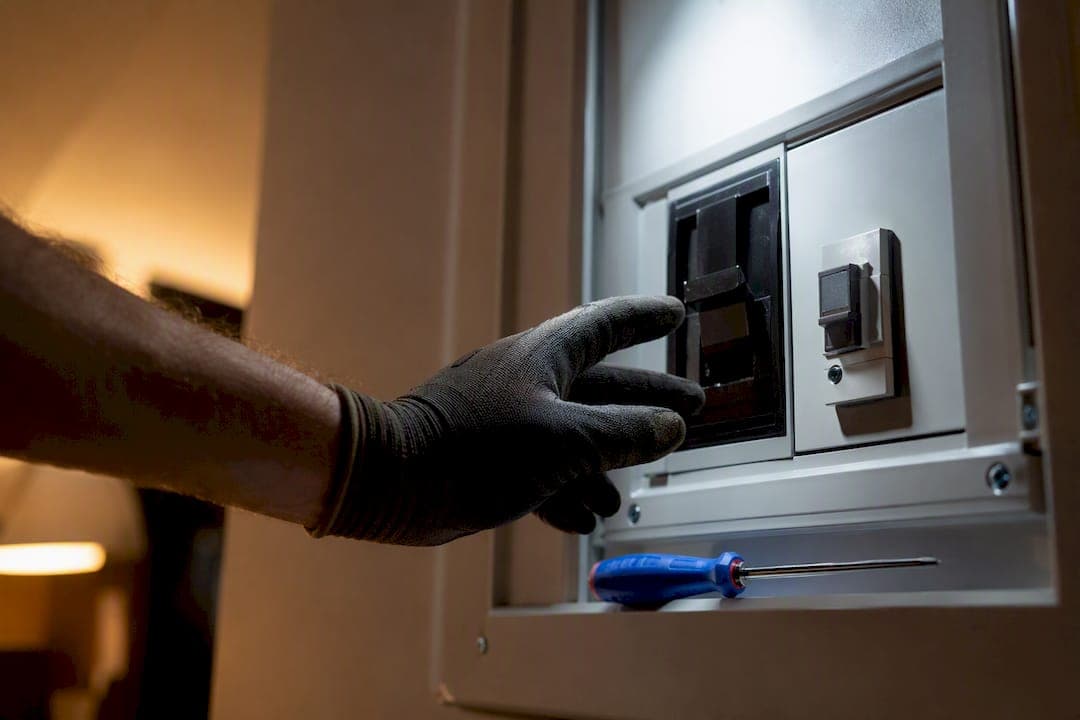
- Do a visual check first. Note whether it's a standard circuit breaker (MCB) or a safety switch (RCD), and look for burning smells, water, or scorch marks around the switchboard or outdoor unit. If any of those are present, leave the circuit off.
- Run the simple, non-live checks. Swap out an obviously dirty filter, clear leaves or debris blocking the outdoor unit, and check the isolator switch is sitting correctly with its weatherproof cover intact.
- Allow yourself one reset, and one only. If it trips again immediately, stop. Leave the circuit off and write down exactly what happened and when.
Never tape, wedge, or hold a breaker in the "on" position. A breaker that keeps tripping is doing its job, and forcing it to stay closed removes the one safeguard stopping a wiring fault from becoming a fire. Don't swap in a higher-rated breaker hoping it'll stop tripping, either. Because a breaker protects the cable rather than the appliance, oversizing it without a full inspection can leave concealed wiring unprotected against overheating. And never open an outdoor electrical box while it's wet, even if the rain has stopped. Standing water inside a terminal box and a multimeter don't mix well.
Faulty safety switches trip for different reasons than a standard circuit breaker does, so knowing which device tripped is worth confirming before you call anyone.
When should you call an electrician or HVAC technician?
Some symptoms mean stop troubleshooting and call someone straight away.
- The breaker trips instantly every single time you reset it, with no delay at all.
- You smell burning, see smoke, or notice heat damage anywhere near the switchboard or outdoor unit.
- The breaker trips even when nothing else is drawing power on that circuit.
For wiring, breaker, and installation faults, you need a licensed electrical worker. For capacitors, compressors, refrigerant, and fan motors, you need an HVAC technician, and often the same trade covers both. On the first visit, expect them to clamp an amp meter on the start circuit, run a capacitance test on the capacitor, inspect the contactor for pitting, and check insulation resistance and the isolator switch. Before they start, ask for a written quote, photos of any damage they find, and confirmation of licensing so you know exactly who's working on your switchboard. If you're dealing with a burning smell or visible damage, treat it the same way you would any electrical emergency and isolate the circuit until help arrives.
How do technicians actually diagnose and fix a tripping AC?
A proper diagnosis follows a set order, not a guess-and-replace approach. The sequence matters because it stops technicians from swapping a $40 part when the real fault is somewhere else entirely.
- Preserve the trip pattern first. Before touching anything, a good technician asks when it trips, under what conditions, and whether anyone reset it repeatedly.
- Clamp amp measurement at start. They measure actual locked-rotor amps against the compressor's nameplate rating rather than assuming the breaker is at fault.
- Capacitor capacitance check. A capacitor's microfarad rating drifts as it ages, and testing it against the rated value confirms whether it's still doing its job.
- Contactor and terminal inspection. Pitted contacts and loose terminals get checked for resistance and heat damage.
- Insulation resistance and earth tests. These catch faults hiding inside motor windings or damaged cable insulation that a visual check would miss.
Repairs then follow roughly this order of cost and time: a capacitor or contactor swap is usually the quickest and cheapest fix, followed by terminal or connection repairs. Fan motor replacement and refrigerant leak repairs sit in the middle. Compressor replacement is the major job, both in cost and downtime.
Fitting a bigger breaker without checking the nameplate data first is one of the most common shortcuts that makes a small fault into a real hazard. The nameplate lists a minimum circuit ampacity and a maximum breaker rating for a reason, and it's rarely a code violation when the numbers look mismatched to an untrained eye.
When you book a technician, mention the trip pattern, any parts touched during a recent service, and whether the unit is still cooling properly between trips. That brief alone often shaves a full callout off the job.
How can you prevent an AC breaker from tripping again?
Most repeat trips are preventable with a routine that takes less time than a load of washing.
- Replace filters every one to three months depending on dust and pet hair, and get the outdoor coil cleaned at least once a year.
- Check the outdoor isolator switch and terminal covers every service visit for weather damage, cracked seals, or early corrosion.
- Book an annual or biannual service that includes an amp draw check, a capacitor health test, and a refrigerant pressure check rather than a quick filter wipe.
- Keep a simple trip log: date, time, weather, what was running. Photos of anything unusual help a technician even more.
Regular maintenance genuinely reduces the odds of repeat trips, largely because most of the causes on this list, capacitor wear, dirty coils, loosening terminals, get worse gradually rather than failing overnight. Catching them early is cheaper every time.
What tradies actually see on these jobs
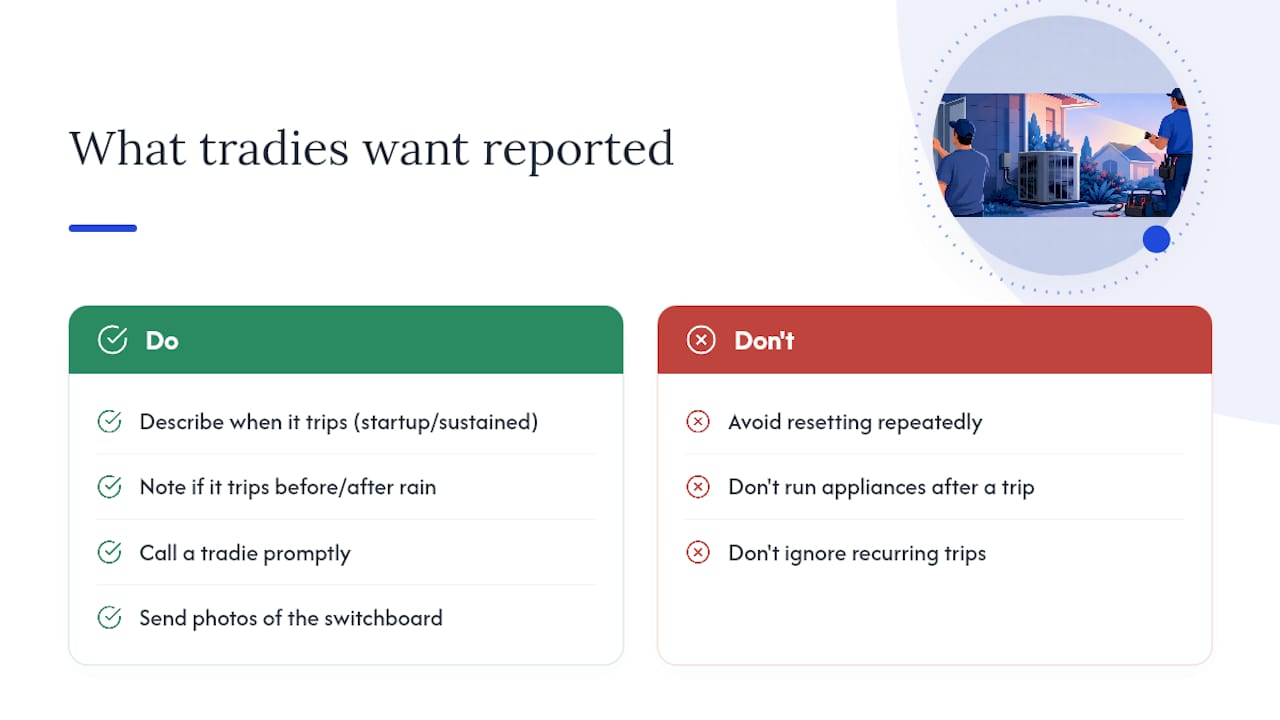
I've lost count of how many callouts start with someone telling me they've reset the breaker "four or five times" before ringing anyone. Nine times out of ten, that habit turns a fifteen-minute capacitor swap into a burnt contactor or a scorched terminal that needs a proper rewire. The trip pattern people describe on the phone, startup versus sustained, before or after rain, is almost always more useful than anything I can see from the switchboard photo they send through.
If you want more on the electrical side of this, our guides on why lights flicker when the aircon starts and what to do in an electrical emergency cover the wiring faults that often show up alongside a tripping breaker.
— Mike
Book a proper diagnostic instead of guessing again
Dualflowservices fixes the actual cause of a tripping AC breaker instead of just swapping the breaker and hoping. Where a general handyman might chase the symptom, our visit covers a full safety check, live amp testing at startup, a capacitor test, and a written quote before any repair goes ahead, so you're not paying to find out twice.

We run emergency call-outs and scheduled maintenance across homes, businesses, aged care, retirement villages, and disability care facilities on the Mornington Peninsula and surrounding Melbourne suburbs. Before you book, jot down when the trip happens, what the weather was doing, and which unit was running. That trip log alone can cut real time off the visit. Head to the Dualflow Services booking page to get a diagnostic on the calendar and stop the guessing game.
Where this guidance comes from
The diagnostic steps and safety guidance above draw on trade-level sources covering nameplate breaker sizing, capacitor testing, and trip-pattern diagnosis, including HVACSchool's explanation of MOCP sizing, americastechnicalservices.com on startup current, and background on residual-current device behaviour from a fellow electrical trade partner.
Sources
- Breaker trips every time the AC starts — what's drawing too much power
- 8 aircon breaker-tripping patterns and what they narrow down
- Understanding Why Your AC Breaker Keeps Tripping